Astronomy, Earth, Moon, Mars & Beyond and Mysteries

Some drugs used to treat Parkinson’s disease can have devastating side effects.

Oh my gosh! And I've had serious reactions to antibiotics, but they were physical. Thanks for sharing, Buzz!

This is horrible!

Over the past year, we have spoken to scores of families whose lives have been torn apart by impulsive behaviours caused by a family of medications known as dopamine agonist drugs.

These include the development of new sexual urges - such as addictions to pornography and sex workers - but also compulsive shopping and gambling that have cost people tens or hundreds of thousands of pounds.

The drugs are an established treatment for Parkinson's, Restless Legs Syndrome and other conditions. They have been prescribed 1.5 million times by GPs alone in England past year.

NHS advice is clear - if you are taking them and you have any concerns, you should speak to your doctor.
One in six Parkinson's patients on the drugs are affected by impulse control disorders - the clinical term for this behaviour - according to one 2010 study of just over 3,000 people.
 
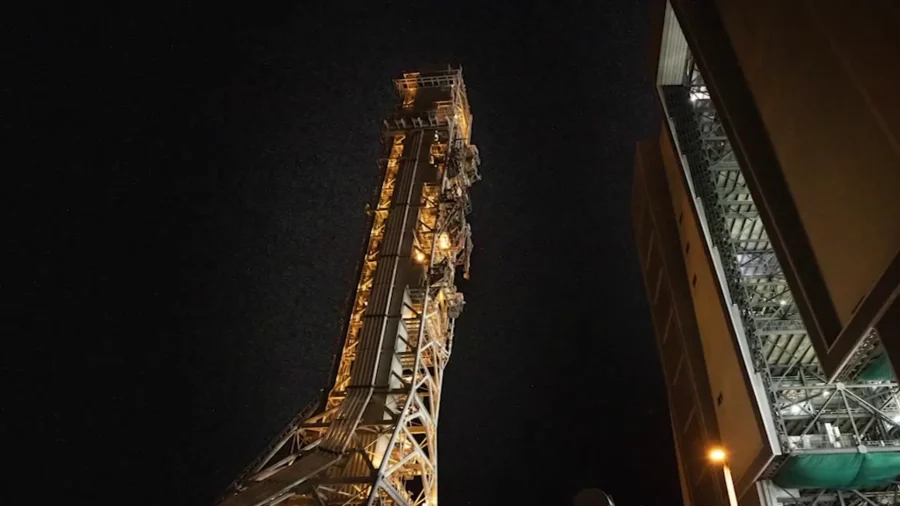
This rocket could reach Mars in 10 days | Watch


Project Orion was a real Cold War proposal to propel spacecraft using nuclear explosions. Engineers planned to detonate small nuclear “pulse units” behind a massive pusher plate to create thrust. Each blast would act like a hammer push in space. The design promised speeds far beyond chemical rockets. In theory, Mars could be reached in days instead of months.
 
Beneath Earth's surface lies a kingdom of undiscovered microscopic life. These "intraterrestrials" survive in some of the harshest conditions on the planet — and scientists are hunting for these microbes.

 
Another cool read!
Buzz, this is incredible, but it actually stands to reason that the natives of Easter Island would have their own written language.

Recently, researchers performed radiocarbon testing on four artifacts held by a Catholic convent in Rome. They found that three date to the 18th or 19th centuries, but the fourth dates to between 1493 and 1509—over 200 years before Europeans arrived on Rapa Nui, according to a study published this month in the journal.

Lead author Silvia Ferrara, a philologist at the University of Bologna in Italy, tells Live Science’s Tom Metcalfe that her team’s research suggests that Rapa Nui islanders invented rongorongo independently, without influence or inspiration from European writing systems. This notion is bolstered by the fact that rongorongo glyphs bear no resemblance to European letters. “Historically speaking,” says Ferrara, “if you borrow a writing system, then you keep it as close to the original as possible.”

The 15th-century tablet appears to come from a species of tree that isn’t native to Rapa Nui. The team thinks it was probably a piece of driftwood, which “raises questions about the island’s ecological past,” as Arkeonews’ Leman Altuntaş writes.
 
The CIA sent a psychic beyond Earth - then went silent. | Watch


Ingo Swann was a confirmed participant in secret CIA remote-viewing programs during the Cold War. During one experiment, he claimed to observe structures and activity on the far side of the Moon. What happened next ended the session abruptly and raised questions that were never publicly answered.
 
Something supercharged Uranus with radiation during Voyager flyby 40 years ago. Scientists now know why


Scientists may have solved a long-standing mystery surrounding Uranus' extraordinarily strong radiation belt.

A new analysis of Voyager 2 data suggests that a temporary space weather event may have made the planet's electron radiation belt more intense than usual as Voyager 2 was passing by. The findings could help to explain why the radiation belt was so much stronger than scientists had predicted it would be.
 
Something bizarre is unfolding on Jupiter and it's no longer acting like a planet


For generations, Jupiter has been shorthand for a straightforward idea: the biggest planet in the Solar System, a gas giant that quietly shepherds comets and anchors the outer worlds. That picture is rapidly falling apart. A cascade of new observations now paints Jupiter as something stranger and more dynamic, behaving less like a passive planet and more like a restless engine reshaping its surroundings.

From a “fuzzy” interior that defies textbook diagrams to eerie waves rippling through its magnetic field and even odd encounters with passing interstellar objects, Jupiter is forcing scientists to rethink what a planet can be. The result is a world that looks less like a scaled‑up version of Earth and more like a failed star, a cosmic experiment in extremes that refuses to sit quietly in its assigned category.

The probe that cracked Jupiter

The modern reimagining of Jupiter starts with a single machine: the Juno spacecraft. Sent by NASA to orbit the giant world, it was designed to map gravity, probe the magnetic field and peer beneath the clouds. In doing so, it has turned Jupiter from a blurry striped ball into a layered, three‑dimensional system, revealing deep jets, chaotic storms and a magnetosphere that behaves more like a miniature astrophysical laboratory than a simple planetary shield.

Reporting on the mission’s legacy describes how the Juno Mission Leaves at Jupiter by showing that its interior is not neatly layered but mixed, as if different kinds of ink had been stirred together. The NASA spacecraft tasked with uncovering the secrets of Jupiter, king of the planets, is now running low on time, yet its data have already upended long‑held assumptions about how such giants form and evolve, as detailed in coverage of The Juno mission’s impact. ...
 
Watch the discovery that turned Mars from dead to disturbing | Watch


Something weird is happening on Mars. What scientists believed was a totally dead, frozen world may actually be hiding a vast underground reservoir of liquid water. The discovery rewrites decades of assumptions and raises a far more unsettling possibility: life may not have vanished — it may have retreated underground. Buried beneath rock and pressure, beyond sunlight and human reach, Mars may still be holding its greatest secret. And we are only beginning to understand it.
 
Thanks so much, Buzz! I saw it earlier on my homepage. It's really exciting!

I found this info at NASA about the crew that will be going!


Four astronauts have been selected for NASA’s Artemis II mission: Commander Reid Wiseman, pilot Victor Glover, and mission specialist Christina Koch from NASA, and mission specialist Jeremy Hansen from the Canadian Space Agency. Artemis II will be NASA’s first crewed flight test of the Space Launch System rocket and Orion spacecraft around the Moon to verify today’s capabilities for humans to explore deep space and pave the way for long-term exploration and science on the lunar surface.
 
Thanks, @Buzz! The idea of using centrifuge for artificial gravity is pretty neat!

At a research facility in Cologne, Germany, scientists employ the physics of centrifugation (spinning) to create an effect similar to gravitational pull by putting test volunteers in a large rotating apparatus while they exercise.

The concept is not far off from the iconic scene from Stanley Kubrick's film 2001: A Space Odyssey in which an astronaut is depicted running in what seems like a giant live-in hamster wheel. In reality, the testing device resembles any number of amusement park rides that spin.

Dr. Guy Trudel said the spinning effect is supposed to reverse what happens to astronauts' blood circulation in space, where "most of your blood and your fluids go up to your chest and into your head."

The strange creature was found in ice - and scientists can't explain it | Watch


Beneath Siberian permafrost and Antarctic ice, entire Ice Age creatures have emerged with fur, organs, and even liquid blood still intact. From woolly mammoths and cave lion cubs to steppe bison, ancient horses, and perfectly preserved wolf pups, these discoveries have stunned scientists and reshaped what we know about extinct animals. As climate change melts frozen ground, long-lost species are resurfacing - sometimes ethically recovered, sometimes illegally exploited. This episode explores the most astonishing frozen mummies ever found and what they reveal about a world that vanished thousands of years ago.
 
Scientists stunned by 'inside out' solar system that mirrors ours


Scientists say a nearby red dwarf star hosts a planetary lineup that looks like a mirror image of our own solar system, with rocky worlds bookending a pair of gas-rich planets. Around the star LHS 1903, the sequence runs rocky, gas, gas, rocky, and a new Science paper reports that the outer planet, LHS 1903 e, appears to be strikingly depleted in gas. With orbital periods ranging from about 2.2 to 29.3 days and what one European Space Agency scientist calls a “late bloomer” outer world, the finding is forcing astronomers to rethink how solar systems like ours first came together.

The surprising architecture of LHS 1903

The system around LHS 1903 features four known planets arranged in a pattern that immediately caught astronomers’ attention: two inner rocky worlds, labeled LHS 1903 b and LHS 1903 c, followed by a pair of larger gaseous planets, LHS 1903 d and LHS 1903 e, with the outermost object unexpectedly turning out to be rocky again.
In the Science paper associated with DOI 10.1126/science.adl2348, the team reports that the planets’ measured radii and densities fall on both sides of the so-called “radius valley,” the statistical divide between compact, likely rocky super-Earths and puffier, gas-rich mini-Neptunes. Lead author Thomas Wilson attributes the precise density measurements to a combination of transit data and stellar characterization that allowed the team to pin down the planets’ sizes and masses with unusual confidence.

Those measurements relied heavily on the CHEOPS space telescope, which was able to watch LHS 1903 for repeated, shallow dips in brightness as each planet crossed the face of the star. According to the Preprint version of the study, CHEOPS recorded distinct transit depths for all four worlds, with the inner planets producing relatively small signals consistent with compact rocky bodies and the middle planets generating deeper transits that match larger, gas-enveloped planets. The authors note that LHS 1903 e, despite occupying the system’s outermost known orbit, presents a transit signature and inferred density that indicate a rocky composition with little or no gaseous envelope, a configuration they argue is best explained by “gas-depleted” formation at a late stage in the system’s history.

Another section of the article:

Why This Mirrors Our Early Solar System

The authors of the Science paper argue that the LHS 1903 system offers a tantalizing parallel to what our own solar system might have looked like in its earliest stages, albeit compressed into a much smaller volume.
In their “inside-out” formation narrative, rocky LHS 1903 b and LHS 1903 c formed first, close to the star, followed by the accretion of gas-rich LHS 1903 d and LHS 1903 e while the protoplanetary disk still contained abundant hydrogen and helium. As the disk evolved and its gas content dwindled, the outermost planet would have been left with a solid core but little envelope, producing the gas-depleted rocky world inferred for LHS 1903 e. ESA’s account highlights Wilson’s description of LHS 1903 e as a planetary “late bloomer,” a phrase meant to capture the idea that it finished forming after most of the disk’s gas had already vanished.

I always believed there were parallel universes, and in this case, a parallel solar system. :sekret:🌎🌍🌏
 
Couple noteworthy science news items:


one of the biggest stars in the universe might be getting ready to explode

 
Last edited:
Now this is truly amazing. Thanks for sharing, Buzz. According to Google, Homs is about 45 miles east of Dahar Safra, Syria where my grandfather's family lived.

The following is a slideshow from MSN.

Scientists announce a physical warp drive is now possible.

Scientists don't believe it's possible during the present time. Who knows, however. We may have a spaceship similar to the Starship Enterprise in the future that's capable of warp 6 or 7! :lol:


Any known warp notions demand large amounts of energy densities. There were early models that required the presence of negative energy and this can only be present in minute quantum action. Newer concepts lower the energy requirements but still require levels of energy more than the current technology.

The principle behind the warp drive is the ability to push the face of the craft inwards and push the back outwards. The ship is never faster than light in it but space-time is, at least theoretically,--theoretically of course--capable of letting the ship move over a long distance very fast.

These studies, even in the absence of an engine, enhance the knowledge of gravity and space-time, as well as quantum effects. Limited exploration is used to refine theories and discover what nature will permit by physicists, and frequently brings to light unanticipated breakthroughs in other fields.

In real models as opposed to sci-fi engines, impossible assumptions are not made where they can be avoided. They substitute magic energy with relativity based equations. Nevertheless, the disjunction between equations and engineering is still colossal and unsolved.
 
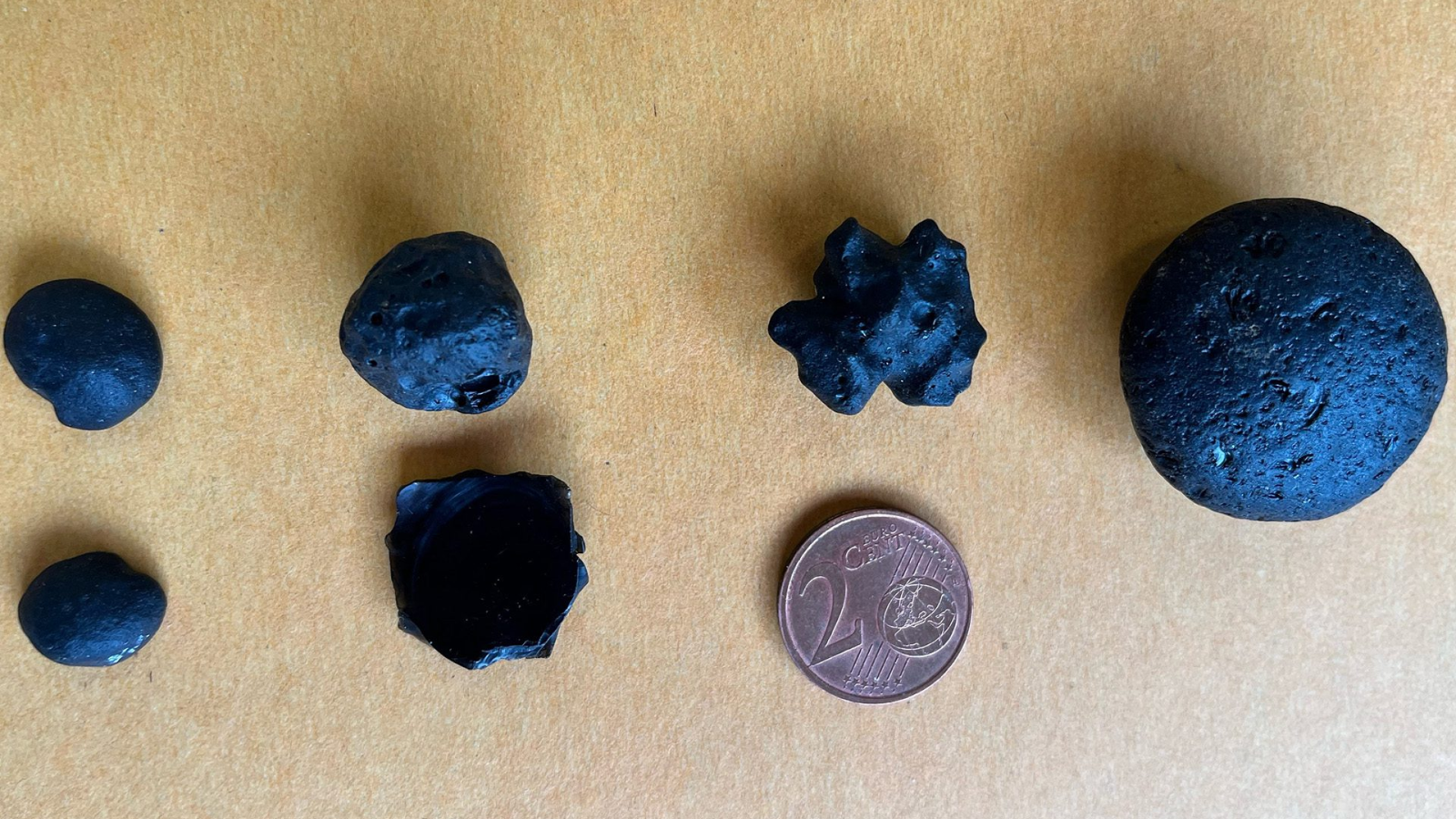
Thanks for sharing this, and the neat and unusual thing about it is that the tektites can only be found in Australia.

Here's something else that's neat and unusual. :lol:

NASA may have proved David Bowie lyric about Mars to be true with stunning find


A NASA rover may have proven a David Bowie singer right after scientists say a hilly landscape that looks like spiderwebs was spotted on the Red Planet.

The Curiosity rover has spent six months on Mars investigating if the site could be a clue to the presence of water. The region has geologic formations called boxwork - low ridges roughly 3 to 6 feet high with sandy hollows between.

In 1972, David Bowie released his fifth album, The Rise and Fall of Ziggy Stardust and the Spiders from Mars, who were the backing band of his fictional alter ego, Ziggy Stardust. However, NASA's Jet Propulsion Laboratory released an explanation of the supposed "spiderwebs" discovered by the rover.

"A hilly landscape that looks like spiderwebs when viewed from orbit holds clues to the history of water on ancient Mars," the lab said. "Crisscrossing the surface for miles, the formations suggest ancient groundwater flowed on this part of the Red Planet later than scientists expected.

"This possibility raises new questions about how long microbial life could have survived on Mars billions of years ago, before rivers and lakes dried up and left a freezing desert world behind."

David Bowie - Ziggy Stardust


The official video for Ziggy Stardust by David Bowie, featuring footage from the Ziggy Stardust tour shot in the UK during 1972 and 1973. Filmed by late Bowie collaborator, photographer Mick Rock, the footage features the album version of Ziggy Stardust as its soundtrack.
 

Users who are viewing this thread

Back
Top
Do Not Sell My Personal Information