Astronomy, Earth, Moon, Mars & Beyond and Mysteries

Simone411

To Boldly Explore Figure Skating Around The World
Messages
21,989
Since there are more than just scientific observations, I decided to start this thread where anyone can post articles about our planet, Earth, including the seven wonders of the world and other mysteries, other planets in our solar system and NASA. So, please feel welcome and free to share what you find in this thread.

Scientists reveal what the looming geomagnetic flip could do to Earth


Earth’s magnetic field is quietly, steadily changing, and the shift is no longer just an abstract concern for geophysicists. As the protective shield that deflects charged particles from the Sun weakens and drifts, scientists are probing what a future geomagnetic flip could mean for satellites, power grids, navigation and life at the surface. The picture that emerges is less an instant doomsday than a drawn-out stress test of the systems that modern civilization depends on.

Researchers now see signs that the field is evolving in ways that resemble the early stages of past reversals, when north and south magnetic poles swapped places. I find that the most striking message from the data is not that catastrophe is imminent, but that the next few centuries could bring a more restless, uneven magnetic shield, with consequences that will be felt first in orbit and in the high atmosphere before they touch daily life on the ground.

This is a video.

NASA shuts down first alien biosignature investigation over concerning 'outpacing' evidence


NASA has temporarily stopped its most ambitious search yet for signs of alien life, after two years of picking apart data from the James Webb Space Telescope (JWST).

Scientists think they have found Noah's Ark in Turkey - dimensions match Genesis


Ground-penetrating radar has detected what researchers describe as artificial internal structures at Turkey’s Durupınar Formation-the boat-shaped geological feature that’s sparked decades of Noah’s Ark speculation. The findings include a 13-foot central corridor, layered interiors suggesting three decks, and internal voids reaching six meters deep, matching biblical dimensions with unsettling precision.

High-tech Archaeology Meets Ancient Claims

You know that feeling when your phone’s ultrasound app reveals something unexpected behind a wall? That’s essentially what happened here, but with military-grade ground-penetrating radar. Noah’s Ark Scans, working with Turkish universities, found sharp-angled walls and systematic internal chambers where geologists expected solid rock formation.

The technology works like underground X-ray vision, bouncing electromagnetic waves off buried structures to create detailed subsurface maps. These aren’t the fuzzy blobs you’d expect from natural geological processes-the radar detected angular structures and organized patterns that suggest human construction.
 
A video from MSN. I more than likely won't be around to see Halley's Comet since I was born in 1958 making me a Baby Boomer. I'd be somewhere around 103 years old. However, the Gen X, Y, Z and Alphas will be around to see it.

The Next Arrival: What Halley's Comet Will Reveal When it Returns


As Halley’s Comet races back toward the Sun, it carries centuries of cosmic memory. Scientists now know it leaves behind dazzling meteor showers and clues about the birth of our solar system. This episode explores what its 2061 return will mean for humanity, how new technology will study its ancient dust, and why this celestial traveler remains one of the most powerful links between our past, our science, and our sense of wonder.
 
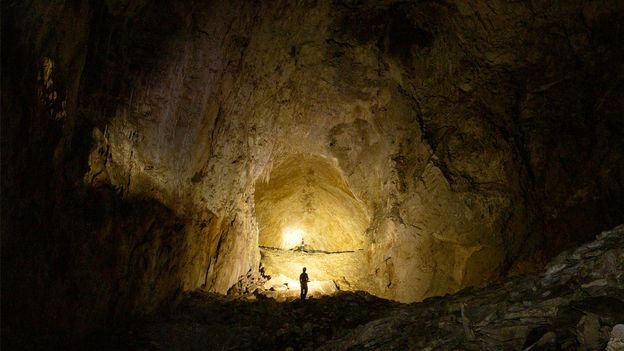
Scientists find 2-million-year-old tunnels spanning two continents built by unknown life form

This is a slideshow:


Passchier's Personal Quest

For over fifteen years, Professor Passchier pursued this mystery across continents. His persistence transformed a curious anomaly into a published scientific discovery.

Passchier described the significance of the finding candidly: "What is so exciting about our discovery is that we do not know which endolithic microorganism this is. Is it a known form of life or a completely unknown organism?"

His statement encapsulates the mystery—not knowing becomes the discovery itself.
 

G4 (Severe) Geomagnetic Storm Watch for 20 January UTC-Day

A G4 (Severe) geomagnetic storm watch is in effect for the 20 January UTC-day due to Earth-arrival of a coronal mass ejection (CME). The CME blasted from the Sun on 18 Jan, in association with an energetic R3 (Strong) solar flare from a sunspot region near center-disk, and is anticipated to arrive at Earth as early as late 19 Jan EST to early 20 Jan. While the G4 Watch is out for the 20 Jan UTC-day, geomagnetic storm levels could range from G1-G3 (Minor-Moderate) upon CME arrival later on 19 Jan EST. CME passage is expected to continue through 20 Jan, but conditions are likely to weaken later in the day. G1 levels remain possible on 21 Jan due to residual CME related effects. Forecasters have a fair measure of confidence in timing and of CME arrival at Earth. Please continue to visit our SWPC webpage for the latest forecasts, information, and updates.
 

GEOMAGNETIC STORM UPDATE: Minor (G1) to strong (G3) geomagnetic storms are underway on Jan. 20th as Earth moves through the wake of a super-fast CME that struck on Jan. 19th. Peak storm levels on Jan. 19th almost reached category G5 (extreme), and there have been several episodes of G4 (severe) since the CME arrived. High-latitude sky watchers should remain alert for auroras.

BIG AURORAS--ESPECIALLY IN EUROPE (UPDATED): Yesterday's CME impact was perfectly timed for Europe. The severe (G4) geomagnetic storm began just after nightfall in the EU, while the New Moon provided dark skies for long-exposure photography. This photo from Brittany, France, sums it up:
 
Earth's magnetic north just jumped into never-mapping territory


Earth’s magnetic north has just crossed an invisible threshold in the Arctic, slipping into a region that modern navigation models have never charted in detail. The shift is subtle on a map but profound for systems that depend on a stable magnetic reference, from smartphone compasses to intercontinental flight paths. I see it as a reminder that the planet’s deep interior is restless, and that our digital infrastructure is now tightly coupled to that hidden motion.

From Boothia Peninsula to New Arctic frontier

When explorers first went looking for the magnetic pole, they treated it as a fixed prize, not a moving target. Ever since James Clark Ross identified it on the Boothia Peninsula in the 19th century, the assumption was that it would drift slowly, tracing a loose path around Canada. Historical reconstructions show that for more than 400 years the North Magnetic Pole meandered across the Canadian Arctic, close enough to be treated as a familiar neighbor rather than a runaway point.

That long, gentle wander has given way to something more dramatic. Over the past few decades, scientists tracking the North Magnetic Pole have watched it accelerate away from Canada and toward northern Eurasia, a motion that earlier reporting described as “hurtling” toward Siberia at about 34 miles per year. Now, according to researchers who say Earth’s magnetic north has crossed an invisible “border” in the Arctic, the point has slipped into territory that modern observers have never seen it occupy. That crossing is what turns a long running drift into a genuinely new chapter.

A pole that will not sit still

What makes this moment different is not just that the pole has moved, but how it is moving. Earlier analyses warned that Earth‘s Magnetic North Pole Is on the Move, And It Is Not Normal, with the pace of change outstripping what many navigation systems were built to handle. More recent work indicates that Earth‘s magnetic north pole has resumed its shift toward northern Eurasia while simultaneously slowing its pace of advance, a change in behavior that forced an urgent update to the global model used by airplanes, ships, GPS receivers and cell phones. I read that combination of rapid relocation followed by deceleration as a sign that the underlying forces in the core are rebalancing rather than simply racing in one direction.

Scientists trying to explain this erratic path are looking deep below our feet. One analysis notes that, According to a report published in Nature, the movement could be linked to hydromagnetic waves rising from deep in the planet’s core, where liquid iron and nickel generate the field. Another video explainer underscores that earth’s north magnetic is on the move and that our technology, from aircraft avionics to smartphone apps, is far more sensitive to that motion than most people realize. The result is a pole that not only refuses to sit still, but also changes speed and direction in ways that challenge long standing assumptions.
 
40 years later, a new look at lessons from the Challenger disaster


As high school teacher Christa McAuliffe prepared to be strapped into the space shuttle Challenger, Brian Russell, an official at the company that built the craft’s solid rocket boosters, had just participated in a fateful teleconference from his Utah headquarters.

Like every other engineer in the conference room at Morton Thiokol on that day four decades ago, the 31-year-old Russell opposed launching because the bitterly cold temperature at Florida’s Kennedy Space Center threatened the O-rings that sealed the rocket boosters. Their managers initially supported this view, but Russell listened in dismay as they reversed themselves under pressure from NASA officials and senior company officials and signed off on the launch.

The mission ended in catastrophe for the reason that Russell feared — a story I know well as a reporter who covered McAuliffe and witnessed the Challenger’s explosion. But for those involved in this tragedy, the families of the astronauts and those who approved the launch, much about this story is perhaps even more relevant today than it was on Jan. 28, 1986.

The belief that there are still lessons to learn from the disaster is what led Russell last year to take an extraordinary step that, until now, has received no public notice. He visited NASA centers across the country, telling the Challenger story in hopes that similar mistakes will not occur as the space agency prepares to launch four astronauts on Artemis II, which is scheduled to fly by the moon as soon as February.

The lesson of Challenger is not just about the O-rings that failed. For Russell and colleagues who accompanied him on the NASA tour, understanding the human causes behind the Challenger disaster provides still-crucial lessons about managers who fail to heed the warnings of their own experts. Russell made his tour to make sure NASA officials “heard it from us and heard the emotional impact that we felt.”
 

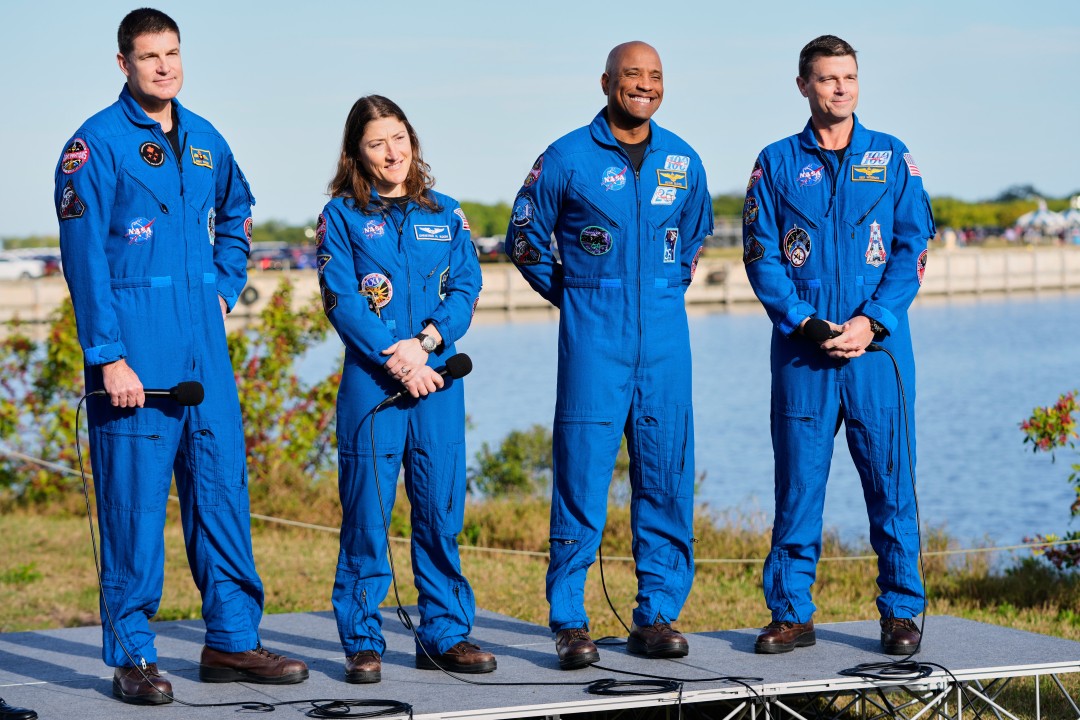
Astronauts aiming for the moon are now living under rules that look a lot like 2020. Futurism reports that the four-person Artemis 2 crew has entered NASA's standard pre-launch isolation program, a roughly two-week "health stabilization" effort designed to keep them from catching anything that could derail the first human trip around the Moon in more than 50 years. They can still see friends and family, but with masks, distancing, and a ban on public places.

The mission, which will send the crew past the Moon's far side and farther from Earth than any humans have ever traveled, is targeting an early February launch, with a key "wet dress rehearsal" set before that while the astronauts remain in quarantine. NASA's Reid Wiseman, Victor Glover, and Christina Koch, joined by Canadian Space Agency astronaut Jeremy Hansen, won't land on the moon or even orbit it but it is still the first crewed mission to "lunar realms" since 1972, Space.com reports.

NASA's Space Launch System rocket and Orion capsule are already at Kennedy Space Center's Launch Complex 39B, positioned for what the agency calls a major step toward putting people back on the lunar surface with Artemis 3 as early as next year. The five potential launch dates next month are Feb. 6-8 and Feb. 10-11, per Space.com. If those don't work out, NASA is looking at five potential launch dates in March and six in April.
 

Users who are viewing this thread

Back
Top
Do Not Sell My Personal Information