
Sylvia
Flight #5342: I Will Remember You
- Messages
- 87,018
‘Life is a Miracle,’ but learning from disasters isn’t: Lessons from Japan’s 2011 earthquake and tsunami (The Conversation, March 10, 2026):

 theconversation.com
15 years after Fukushima nuclear disaster, recovery continues in changed landscape (Stars and Stripes, March 10, 2026):

 www.stripes.com
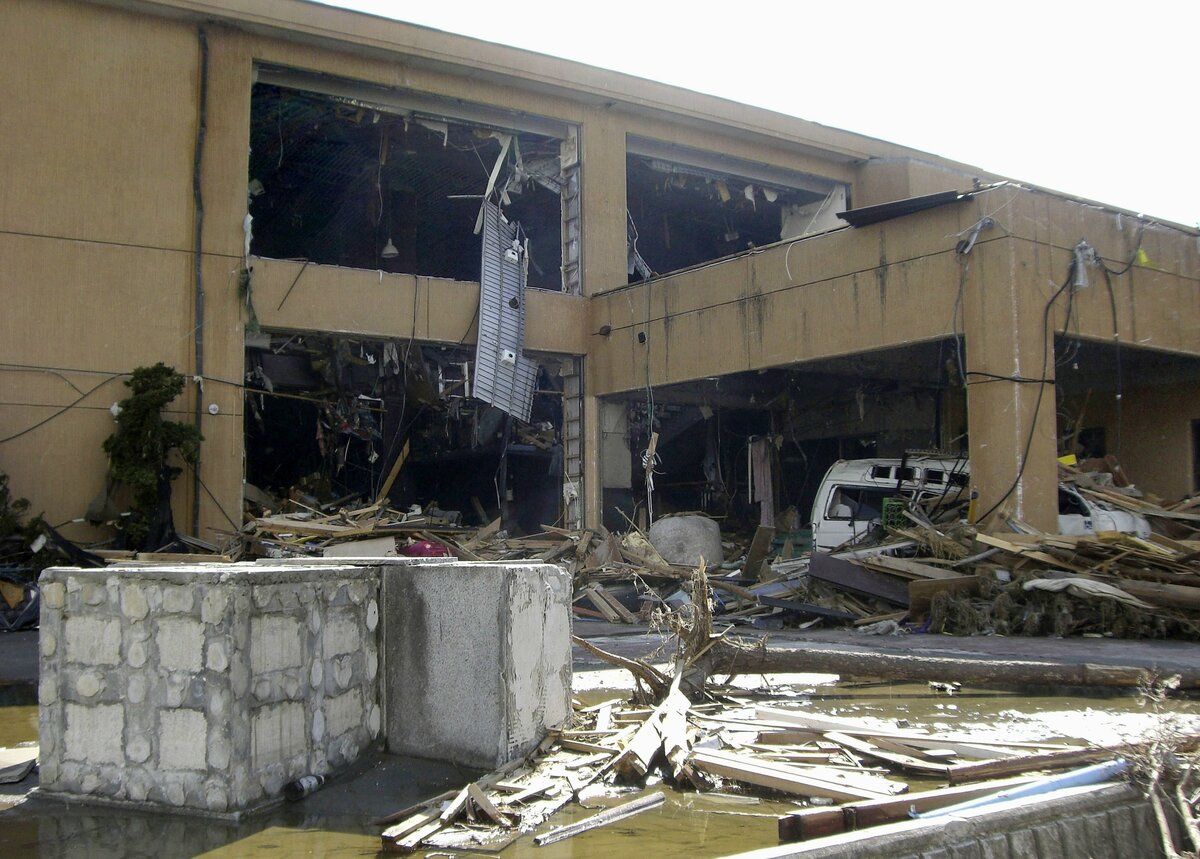
Unprecedented efforts lead to revive damaged local art from 2011 tsunami (March 11, 2026):
 english.kyodonews.net
‘Life is a Miracle,’ but learning from disasters isn’t: Lessons from Japan’s 2011 earthquake and tsunami
Memorials, monuments, preserved school buildings and found objects form part of a memory culture that keeps conversations about risk reduction going.
theconversation.com
In April 2012, a Harley-Davidson motorcycle was found on Graham Island in the Haida Gwaii archipelago off the coast of British Columbia. It belonged to Ikuo Yokoyama, a survivor of the earthquake and tsunami that struck northeastern Japan a year earlier, in March 2011. Yokoyama lost his home and three family members.
Almost 20,000 people were killed, and economic losses exceeded US$235 billion. Fifteen years later, the disaster remains a reference point in public debate because of the unprecedented damage, and because of the long-term questions it raised about risk, responsibility and preparedness.
Yokoyama’s motorcycle has since become part of a memorial culture dedicated to the 2011 disaster. After receiving offers to have it returned, Yokoyama decided that the motorcycle should be exhibited at the Harley-Davidson Museum in Milwaukee, where it still stands today as a memorial to those whose lives were affected by the disaster.
15 years after Fukushima nuclear disaster, recovery continues in changed landscape (Stars and Stripes, March 10, 2026):
15 years after Fukushima nuclear disaster, recovery continues in changed landscape
Nature is reclaiming abandoned buildings in the exclusion zone surrounding Fukushima Daiichi Nuclear Power Plant, an area that appears frozen in time 15 years after disaster struck.
The crisis also prompted the evacuation of thousands of U.S. military family members from Japan during a relief effort dubbed Operation Tomodachi — the Japanese word for “friend” — involving about 20,000 American service members. Today, areas surrounding the plant remain off limits. Part of the landscape is dominated by a facility holding vast amounts of radioactive soil, while electronic signs along roadways display radiation levels. A sign near The Great East Japan Earthquake and Nuclear Disaster Memorial Museum in Futaba, just north of the restricted zone, showed radiation levels of 0.045 microsieverts per hour on March 4. That level is relatively low, but the displays serve as a reminder of the disaster’s lingering effects. In some cleared areas, fields stripped of radioactive soil remain barren. Large solar panel installations now stretch across the countryside. Inside the exclusion zone, however, nature is steadily reclaiming what people left behind. Buildings sit largely untouched since the mass evacuation, with yards overgrown and interiors still holding furniture, personal belongings and other traces of daily life.
Unprecedented efforts lead to revive damaged local art from 2011 tsunami (March 11, 2026):
FEATURE: Unprecedented efforts lead to revive damaged local art from 2011 tsunami
More than 100 art pieces in northeastern Japan damaged by the massive tsunami disaster 15 years ago have been brought back to life through the unprecedented and painstaking dedication of nationwide experts, offering solace to locals cherishing their hometown memories.
MORIOKA, Japan - More than 100 art pieces in northeastern Japan damaged by the massive tsunami disaster 15 years ago have been brought back to life through the unprecedented and painstaking dedication of nationwide experts, offering solace to locals cherishing their hometown memories.
All of them have been restored and made their way back home to the Rikuzentakata City Museum in Iwate Prefecture, which itself was rebuilt after being destroyed by the tsunami that struck Japan's northeastern Pacific coast following a magnitude 9.0 quake on March 11, 2011, leaving paintings there buried in the rubble.
The roughly 150 damaged pieces included oil paintings, watercolors and acrylic paintings by artists with ties to the city, as well as work by Genichiro Inokuma, known as the designer of an iconic wrapping paper for department store chain Mitsukoshi.
Under the initiative of the Cultural Affairs Agency, the artwork, which was inundated in seawater or covered with mud, was all salvaged in the summer of 2011.